


Fathers with Adult Children: Aaron and Moses — Faithfulness When Loss Is Not Restored
- Feb 26
- 3 min read
Last week, in Job, we saw a father who suffered unimaginable loss — and who, in the mercy of God, was granted new sons and daughters and the renewed joy of family life.
Scripture allowed us to rest there, not because sorrow was erased, but because God proved Himself generous again in this life.
This week, the tone changes.
We turn to Aaron and Moses — two brothers, two fathers, two callings — and a form of loss that is not undone.
Aaron — A Father Who Held His Peace
Aaron’s sons are priests. They minister in the newly consecrated tabernacle. Their calling is high, visible, and sacred.
Then comes one of the most sobering moments in Scripture.
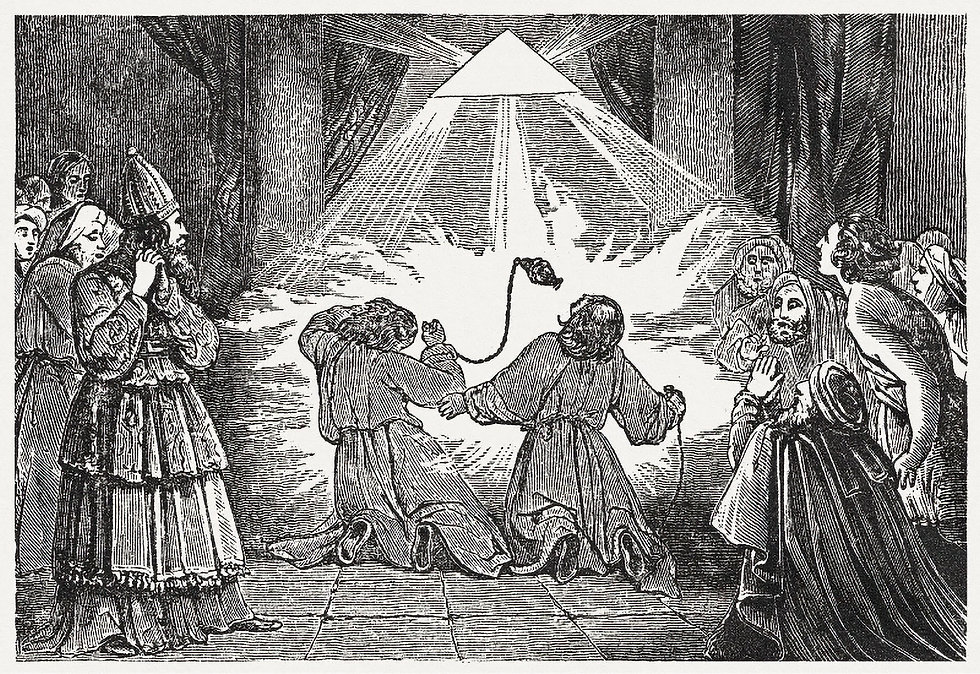
“And Nadab and Abihu, the sons of Aaron, took either of them his censer, and put fire therein… which he commanded them not. And there went out fire from the LORD, and devoured them, and they died before the LORD.” (Leviticus 10:1–2)
Nadab and Abihu die suddenly, publicly, and without appeal.
There is no explanation given to soften the blow. And then comes one of the quietest, heaviest lines in the Bible:
“And Aaron held his peace.” (Leviticus 10:3)
No protest. No recorded prayer. No argument with God.
Aaron is a father whose grief must be carried silently, because the holiness of God is at stake and the calling remains.
He does not abandon his post.
He does not collapse publicly. He obeys, even when obedience costs him everything.
His remaining sons, Eleazar and Ithamar, continue in the priesthood. Life goes on — but it is forever changed.
Aaron teaches fathers that there are losses for which Scripture offers no earthly restoration — only the strength to remain faithful.
Moses — A Father Overshadowed by Calling
Moses’ fatherhood is different, but no less sobering.
We know the names of his sons — Gershom and Eliezer — but we know almost nothing about their lives. They never rise into prominence. They leave no visible legacy.
Early in Moses’ ministry comes a startling moment:
“The LORD met him, and sought to kill him.” (Exodus 4:24)
Moses has neglected the covenant sign in his own household.
It is his wife Zipporah — not Moses — who acts decisively and saves his life.
This is a quiet warning: a man may be faithful in public calling and yet falter in private responsibility.
Moses leads a nation. He speaks with God face-to-face. Yet his own sons remain in the margins of the story.
Scripture does not condemn Moses here, but neither does it celebrate his fatherhood. The silence itself speaks.
Two Brothers, One Hard Truth
Aaron and Moses show us different forms of the same reality.
Aaron loses sons and must walk forward without restoration
Moses fulfills his calling, but leaves little trace of his sons in the story
Both men are faithful. Both are used mightily by God.
Neither is given a tidy family legacy.
This matters — especially after Job.
Because Scripture refuses to teach that faithful fathers are guaranteed visible outcomes in their children’s lives.
Sometimes God restores. Sometimes He sustains. Sometimes He simply asks us to trust and obey.
A Word for Fathers Today
Some fathers bury children. Some watch children drift quietly out of the story. Some serve God faithfully while carrying private grief no one sees.
Aaron and Moses stand with you.
They remind us that fatherhood is not measured by legacy, success, or explanation — but by faithfulness before God.
God sees the fathers who “hold their peace.” God sees the fathers whose callings cost them dearly. God does not forget their obedience.
Closing Prayer
Lord, You know the cost that faithfulness can exact. Give strength to fathers who grieve without answersand grace to those whose children walk paths they cannot follow.
Teach us to trust You when loss is not restoredand to serve You with steady hearts. In Jesus Name. Amen.
Behold, how good and how pleasant it is for brethren to dwell together in unity!
Psa 133:2 It is like the precious ointment upon the head, that ran down upon the beard, even Aaron's beard: that went down to the skirts of his garments;
Psa 133:3 As the dew of Hermon, and as the dew that descended upon the mountains of Zion: for there the LORD commanded the blessing, even life for evermore.


Comments