


Elisha, Part III — “Blindness and Bread”
- Mar 2
- 3 min read

2 Kings 6:18–23
Monday, March 2
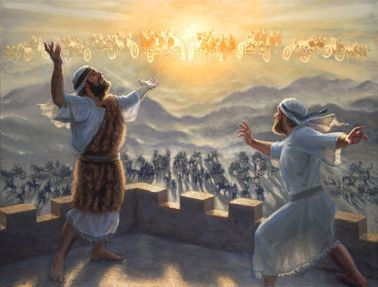
Last week we saw the mountain full of horses and chariots of fire. The servant’s eyes were opened. Heaven was already there.
This week, we see what Elisha does with that confidence.
The Syrian army has surrounded Dothan. They have come to seize the prophet. But instead of swords flashing and fire falling, something quieter happens.
“And when they came down to him, Elisha prayed unto the LORD, and said, Smite this people, I pray thee, with blindness.” (2 Kings 6:18)
And the LORD smote them with blindness according to the word of Elisha.
Notice: this is not destruction. It is disorientation.
Elisha then does something extraordinary. He walks toward the very army that came to capture him and says:
“This is not the way, neither is this the city: follow me.” (v.19)
And they follow him.
Blind soldiers, led by the man they intended to arrest.
He leads them not into a trap, but into Samaria—the capital of Israel—straight into the presence of the king.
Then Elisha prays again:
“LORD, open the eyes of these men, that they may see.” (v.20)
Their sight returns.
They look up and find themselves surrounded—not at Dothan, but in the heart of Israel’s stronghold.
The king of Israel sees an opportunity. He asks eagerly:
“My father, shall I smite them? shall I smite them?” (v.21)
This is the world’s instinct. Finish it. End them. Strike while they are helpless.
But Elisha answers:
“Thou shalt not smite them.” (v.22)
Instead:
“Set bread and water before them, that they may eat and drink, and go to their master.”
Bread.
Water.
A feast, in fact.
And then release.
The text concludes quietly:
“So the bands of Syria came no more into the land of Israel.” (v.23)
This is a deeper theophany than fire on the mountain.
Here we see not only the power of God, but His heart.
Elisha blinds, but only temporarily. He leads, but not to humiliation. He triumphs, but without cruelty.
The unseen army of heaven stands behind him, yet he chooses mercy.
Power restrained. Justice tempered. Enemies fed instead of slaughtered.
It is impossible not to see a greater Prophet here.
One day, another Servant would stand surrounded by enemies. He, too, would have had access to more than twelve legions of angels. He, too, would refuse to strike. He, too, would answer hatred not with annihilation but with mercy.
Elisha gives bread to his enemies.
Christ gives Himself.
The world believes safety comes from eliminating threats. The kingdom of God often disarms by grace.
The result? “The bands of Syria came no more.”
Mercy accomplished what violence could not.
A Word for Us
There are moments when we are given an advantage over those who wrong us. The question is not whether we have power, but what we will do with it.
The mountain may be full of horses and chariots of fire.
But sometimes the greater miracle is bread and water.
Closing Prayer
Lord, when You give us strength, teach us mercy. When we have the upper hand, give us a Christlike heart. Help us overcome evil with good, for Jesus’ sake. Amen.
************************
The mercies of God What a theme for my song
Oh I never could number them o'er
They're more than the stars in the heavenly dome
Or the sands of the wave beaten shore
Chorus
For mercies so great, What return can I make
For mercies so constant and sure
I'll love him, I'll serve Him with all that I have
As long as my life shall endure
They greet me at morn when I waken from sleep
And they gladden my heart at the noon
They follow me on into shades of the night
when the day with its labor is done
His angels of mercy encompass me round
Wheresoever my pathway my lead
Each turn of the road some new token reveals
Oh For me life is blessed indeed
- Thomas O, Chisholm, 1935
O satisfy us early with thy mercy; that we may rejoice and be glad all our days. – Psalm 90:13


Comments